
In high-rise commercial office towers, bustling corporate headquarters, luxury mixed-use complexes, and high-volume transit hubs, elevator performance directly dictates the rhythm of the entire building. When hundreds of tenants arrive simultaneously during morning rush hour, every second wasted on sluggish door opening and closing cycles compounds into massive lobby congestion and frustrated occupants.
For architects, property managers, and vertical transportation engineers, optimizing passenger flow requires more than just faster elevator cars—it demands high-speed, precision-engineered entrance door operators.
The Bottleneck of Transit Efficiency
While hoistway travel speed between floors gets the most attention, studies in vertical traffic engineering reveal that door operation accounts for a substantial portion of total transit time per trip.
The Cumulative Delay: If a legacy door operator takes an extra two or three seconds per floor to fully open, pause, and close, those lost seconds multiply across dozens of stops and hundreds of daily trips, significantly reducing the building’s overall handling capacity.
Inefficient Dwell Times: Fixed, overly conservative door dwell times keep cars sitting stationary at landing floors long after passengers have safely entered or exited, choking building throughput.
Engineering Solutions for Ultra-Efficient Flow
Modern high-speed elevator door systems combine advanced kinematics with smart control technology to maximize throughput without sacrificing safety:
High-Torque, Brushless DC Operators: Replacing older AC motors with modern brushless DC door operators allows for lightning-fast acceleration and deceleration curves, slicing door travel times significantly while maintaining whisper-quiet operation.
Advanced Light Curtain Arrays: Instead of relying on slow-reacting mechanical safety edges, dense infrared light curtain grids detect entering passengers instantaneously, allowing doors to begin closing the millisecond the threshold is clear safely.
Dynamic Dwell-Time Optimization: Smart elevator control systems adjust door open times dynamically based on traffic patterns—keeping doors open longer during heavy lobby departures while snapping doors shut quickly during intermediate floor stops.
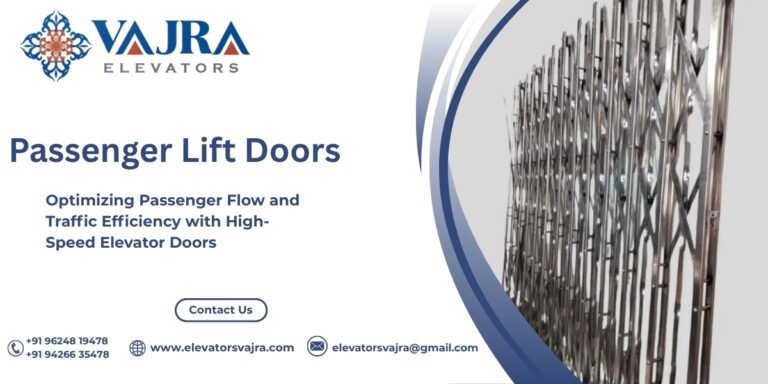
(To examine precision-engineered, high-performance entrance solutions built for modern commercial traffic demands, explore our product catalog for Passenger Lift Doors and IFG Doors.)
Best Practices for Facility Managers
Monitor Lobby Queues: Pay close attention to peak-hour elevator wait times and lobby congestion to determine if your door operator speeds or sensor sensitivities require recalibration.
Routine Operator Calibration: Ensure that high-speed mechanisms are regularly serviced so that rapid opening and closing cycles do not induce premature wear on suspension rollers and guide tracks.
Conclusion
Traffic efficiency is the ultimate test of building engineering. By upgrading to high-speed elevator door systems and smart sensor technologies, facility operators eliminate bottlenecks, smooth out peak rush hours, and deliver an exceptional vertical transit experience.
Looking for high-performance, precision-engineered elevator entrance solutions built for modern commercial efficiency? Contact our engineering team today.