
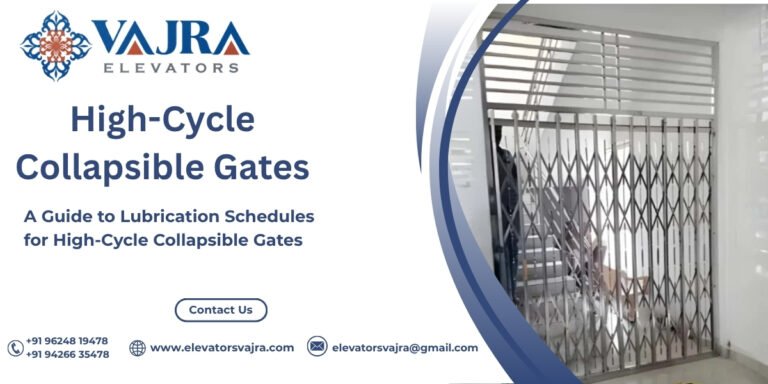
In high-traffic commercial buildings, busy logistics warehouses, and bustling manufacturing plants, vertical transportation systems operate almost continuously. Among the hardest-working components in these setups are the collapsible entry gates. Whether manually operated or integrated into semi-automated workflows, these expanding metal barriers experience thousands of opening and closing cycles every single week.
Because every pivot point, rivet, and sliding block undergoes constant friction, establishing a disciplined, proactive lubrication schedule is essential for preventing premature mechanical failure.
Why High-Cycle Gates Require Specialized Maintenance
A collapsible gate relies on a synchronized network of diagonal slats moving across top and bottom tracks. Without proper lubrication, several issues arise:
Metal-on-Metal Friction: As the rivets and pivot pins rub together under load, unlubricated friction generates heat, leading to micro-abrasions and eventual binding.
Increased Manual Effort: For manual gates, a dry mechanism requires significantly more physical force to open and close, causing frustration for operators and accelerated wear on handle assemblies.
Track Dragging: Suspension rollers and guidance blocks can seize up if dust mixes with unmaintained residue inside the track channels.
(To understand how robustly built access barriers handle heavy daily usage, explore our specifications for SS Collapsible Doors and MS Collapsible Doors.)
Recommended Lubrication Schedule
To keep movable metallic assemblies operating fluidly, facility managers should adhere to a structured maintenance timeline:
Monthly Visual and Tactile Checks:
Test the door motion manually to detect any stiffness or uneven resistance.
Inspect the overhead suspension track for accumulated debris or foreign particles.
Quarterly Pivot Point Lubrication:
Apply a light, penetrating machine oil or silicone-based lubricant directly to the intersecting rivet joints and scissor pins. Avoid heavy greases that tend to attract floating dust and lint in industrial settings.
Wipe away any excess fluid to prevent dripping onto floor thresholds or user clothing.
Biannual Track and Roller Service:
Clean out the top and bottom guide channels thoroughly using a compressed air blower or dry cloth.
Apply a thin film of dry-film lubricant or specialized track spray to ensure smooth rolling blocks without leaving a sticky residue.
Best Practices for Applying Lubricants
Choose the Right Formula: Always opt for non-gummy, anti-dust lubricants. Heavy petroleum greases can capture warehouse dust and metallic filings, forming an abrasive paste that actually accelerates wear.
Target the Friction Zones: Concentrate lubricant application precisely on the moving pivot points rather than the flat surface of the steel slats.
Conclusion
A structured maintenance routine requires minimal time but yields massive dividends in extending the operational lifespan of your building’s entry systems. Proper care ensures that security, safety, and seamless motion go hand in hand.
Need expert advice on maintaining or upgrading your facility’s vertical transport infrastructure? Contact our engineering team today.