
When specifying materials for industrial buildings, warehouses, or heavy-duty goods transport zones, mild steel (MS) remains one of the most trusted engineering alloys. Known for its high tensile strength, exceptional formability, and cost-effectiveness, it provides the robust structural foundation needed for high-cycle industrial applications.
However, because mild steel contains a lower carbon content and lacks the natural chromium film found in stainless steel, it is naturally susceptible to oxidation—commonly known as rust—when exposed to moisture and oxygen.
Understanding the metallurgy of mild steel and applying the right protective measures is critical for ensuring that heavy-duty access barriers maintain their structural integrity over decades.
The Science of Steel Oxidation
To understand why protective treatments are non-negotiable, we have to look at what happens at a microscopic level:
The Electrochemical Reaction: When moisture from the air combines with oxygen on an unprotected iron-alloy surface, an electrochemical reaction takes place.
Porous Scale Formation: Unlike the stable oxide layer that forms on aluminum or stainless steel, rust on mild steel is porous. It flakes off over time, exposing fresh metal underneath and accelerating deep structural degradation.
In industrial settings—such as manufacturing plants, loading docks, or logistics warehouses—factors like humidity, chemical vapor exposure, and physical abrasions can drastically speed up this process if the steel is left bare.
The Role of Advanced Surface Coatings
Because raw mild steel cannot be left exposed in demanding architectural or industrial environments, engineering teams rely on specialized surface treatments to create an impenetrable barrier against environmental elements.
Electro-Galvanizing and Hot-Dip Galvanizing: Applying a sacrificial layer of zinc creates a dual-action defense. Even if the outer layer is scratched, the zinc oxidizes first, protecting the underlying mild steel substrate from moisture contact.
Industrial Powder Coating: Unlike traditional liquid paints, powder coatings are electrostatically applied and cured under heat. This creates a thick, uniform, and flexible skin that resists chipping, scratching, and chemical degradation—making it ideal for high-impact environments.
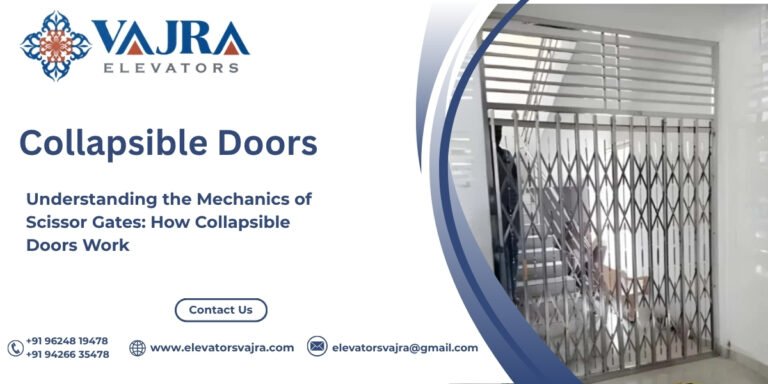
(To see how these protective finishes are applied to heavy-duty building components, explore our range of engineered MS Collapsible Doors.)
Best Practices for Maintaining Coated MS Structures
Even the highest-grade protective coatings require proactive care to maximize their service life in harsh industrial environments:
Immediate Touch-Ups: If a heavy load or pallet scrapes the surface of a door frame, sealing the scratch promptly prevents moisture from creeping under the surrounding coating.
Avoiding Harsh Chemical Cleaners: Using abrasive or highly acidic cleaning agents can degrade powder-coated finishes over time. Opt for neutral industrial detergents during scheduled facility upkeep.
Conclusion
Mild steel offers unmatched structural resilience for heavy-duty vertical transport applications, but its longevity depends entirely on how well it is shielded from the elements. By combining high-tensile material properties with advanced galvanization and powder coating technologies, engineers can deliver barriers that stand up to the most demanding industrial conditions.
Looking for robust, custom-finished structural solutions for your next project? Get in touch with our team to discuss your exact manufacturing requirements.