
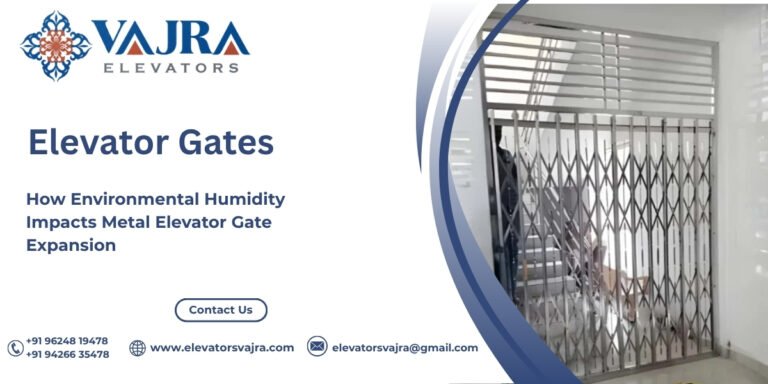
When designing or maintaining multi-story commercial and industrial buildings, engineers account for a wide array of dynamic loads, structural shifts, and environmental variables. One of the most subtle yet critical physical factors influencing vertical transportation hardware is ambient climate change—specifically, the combined effect of temperature and humidity on metal building components.
While metal elements like steel and iron are celebrated for their rigidity, they are not entirely static. Understanding how environmental variables influence metal door structures is key to ensuring lifelong, friction-free operation.
The Physics of Thermal and Environmental Expansion
Every metal alloy possesses a specific coefficient of thermal expansion. When ambient temperatures rise—or when high-humidity seasons cause moisture levels to fluctuate within a building shaft—structural components undergo microscopic dimensional changes.
Linear Expansion: Even a fraction of a millimeter of expansion across a large grid or a series of interlocking metal slats can alter the alignment of a moving assembly.
The Humidity Factor: While pure stainless or mild steel does not “absorb” moisture like wood, high humidity combined with temperature gradients can create micro-films of condensation within tight guide channels, influencing friction coefficients and surface resistance.
Impact on Sliding and Collapsible Barriers
Elevator entrances, security gates, and heavy-duty partitions operate within tight mechanical tolerances. When environmental shifts cause minor expansions or contractions:
Track Binding: If clearance tolerances inside the top suspension track or bottom guide channel are too narrow, seasonal expansion can cause the gate to feel stiff or sluggish during manual or automated operation.
Uneven Wear: Increased friction points lead to localized wear on pivot pins, rivets, and sliding blocks, shortening the overall maintenance cycle of the mechanism.
(To explore robustly engineered entry systems designed to handle demanding environmental conditions, view our specifications for SS Collapsible Doors and MS Collapsible Doors.)
Engineering Solutions for Climate resilience
To prevent environmental expansion from disrupting daily building operations, modern manufacturing incorporates specific design safeguards:
Precision Tolerance Engineering: Designing calculated expansion clearances into the lattice structure prevents binding during extreme seasonal weather shifts.
Advanced Surface Sealants: High-grade powder coatings and galvanization act as thermal buffers, preventing direct heat absorption and minimizing radical temperature fluctuations within the core metal.
Conclusion
Environmental factors play a silent yet powerful role in the lifecycle of building hardware. By anticipating how humidity and temperature interact with metal components, architects and facility managers can ensure smooth, reliable vertical transit year-round.
Need expert guidance on selecting climate-resilient entry solutions for your facility? Contact our team today to discuss your project requirements.